Mastering the Halftone Perspective Star Design Element in Modern Graphics
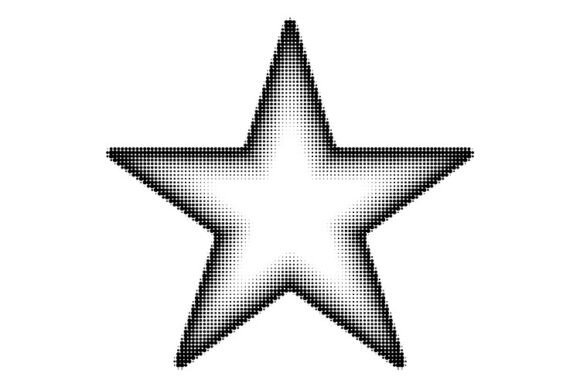
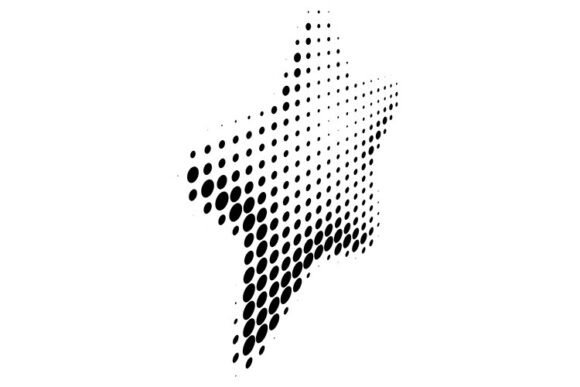
In the ever-evolving landscape of graphic design, certain visual motifs manage to bridge the gap between retro nostalgia and contemporary minimalism. Among these, the halftone perspective star has emerged as a powerful tool for designers seeking to add depth, texture, and dynamic energy to their compositions. This specific aesthetic combines the classic printing technique of halftoning with geometric precision, resulting in abstract decorative black halftone star textures that stand out vividly against an isolated background.
Whether you are crafting a high-impact poster, assembling a mixed-media collage, or developing a bold advertising campaign, understanding how to leverage this design element can significantly elevate your visual output. The interplay of light and shadow created by varying dot sizes within a geometric circular shape elements pattern in a star shape offers a unique visual rhythm that captures attention without overwhelming the viewer.
The Anatomy of the Halftone Star
To truly appreciate the utility of the Halftone Perspective Star Design Element, one must first understand its construction. Unlike a flat, solid-colored star, a halftone star is built from thousands of tiny dots. These dots vary in diameter, creating gradients and the illusion of three-dimensional form on a two-dimensional plane. This technique, rooted in traditional offset printing, mimics the way human eyes perceive tone and shading.
When applied to a star shape, particularly one rendered in perspective, the halftone effect adds a sense of volume. The dots might be larger and denser in the areas meant to appear closer or darker, gradually becoming smaller and more sparse as they recede into the "light" or background. This creates a striking contrast, especially when using abstract decorative black halftone star textures on an isolated white or neutral background. The isolation ensures that the intricate details of the dot pattern are not lost, allowing the geometry to take center stage.
Geometric Precision Meets Organic Texture
The beauty of this design lies in the tension between rigid geometry and organic texture. The underlying structure is strictly mathematical—a geometric circular shape elements pattern arranged to form a star. Yet, the halftone application softens this rigidity, introducing a grainy, tactile quality that feels almost analog. This duality makes the element versatile. It fits seamlessly into brutalist designs that favor raw, unpolished aesthetics, yet it also complements clean, modern layouts that require a focal point with subtle complexity.
Designers often choose this style because it avoids the sterility of pure vector shapes while maintaining the scalability and crispness required for professional print work. The result is a graphic that feels both engineered and handcrafted, a rare combination that appeals to a wide range of audiences.
Practical Applications in Design Workflows
Integrating a Halftone Perspective Star Design Element into your workflow opens up numerous creative possibilities. Its primary strength is its ability to serve as a dominant visual anchor without requiring complex illustration skills from the designer. Because the texture is pre-rendered or easily adjustable via vector nodes, it saves time while delivering a high-end look.
- Poster Design: In music festival posters or event flyers, the star can act as a central icon. The high contrast of black halftones against a bright background ensures readability from a distance, while the perspective adds a dynamic sense of movement.
- Collage Art: For digital or physical collages, the isolated background makes it easy to layer the star over other images. The transparent or white background allows for seamless blending modes, such as "Multiply," to integrate the texture with underlying photos.
- Advertising and Branding: Brands looking to convey innovation or a retro-futuristic vibe can use this element in social media ads. The geometric nature suggests precision and technology, while the halftone texture adds warmth and approachability.
When using these assets, consider the scale. The intricate dot patterns can lose definition if scaled down too small. Therefore, they are best suited for large-format prints or digital displays where the viewer can appreciate the gradient transitions. For smaller applications, such as favicons or mobile icons, simplifying the halftone density may be necessary to maintain clarity.
File Formats: EPS and JPG Explained
When acquiring or creating these design assets, you will typically encounter two primary file formats: EPS and JPG. Understanding the distinction between them is crucial for maintaining quality throughout your design process.
EPS (Encapsulated PostScript) files are vector-based. This means the Halftone Perspective Star Design Element is constructed using mathematical paths and points rather than pixels. The primary advantage of EPS is infinite scalability. You can resize the star from the size of a business card to a billboard without any loss in quality. Furthermore, vector files allow for easy editing. You can change the color of the dots, adjust the spacing, or modify the star's proportions directly within software like Adobe Illustrator. For professional designers who need flexibility, EPS is the preferred format.
JPG (Joint Photographic Experts Group) files, on the other hand, are raster images. They consist of a fixed grid of pixels. While they cannot be scaled up without pixelation, JPGs are universally compatible and easy to use in non-vector programs like Photoshop or Canva. They are ideal for quick mockups, web usage, or when the final output size is known and fixed. When working with abstract decorative black halftone star textures on an isolated background in JPG format, ensure the resolution is high (300 DPI for print) to preserve the sharpness of the halftone dots.
Choosing the Right Format for Your Project
If your project involves extensive customization, such as changing the star's angle or integrating it into a complex vector illustration, start with the EPS file. This gives you full control over every aspect of the geometric circular shape elements pattern. However, if you are creating a quick social media graphic or a web banner where speed is essential, the JPG version provides a ready-to-use solution. Many designers keep both on hand, using the EPS for master files and exporting JPGs for final delivery.
Aesthetic Considerations and Best Practices
While the Halftone Perspective Star Design Element is visually striking, it requires thoughtful placement to be effective. Because halftones rely on contrast, the background color plays a pivotal role. Black halftones pop most dramatically against white, light gray, or vibrant neon backgrounds. Placing them against dark or busy backgrounds can cause the details to vanish, reducing the star to a muddy silhouette.
Additionally, consider the mood you wish to convey. The perspective aspect of the star can imply directionality. A star pointing upward suggests growth, ambition, or positivity, while a tilted or inverted star might create a sense of unease or dynamic instability. Align the orientation of the star with the emotional tone of your message.
Another key consideration is balance. Since the halftone texture is visually dense, pair it with ample negative space. Cluttering the area around the star with too much text or additional graphics can diminish its impact. Let the abstract design element breathe. Use it as a hero image, allowing its intricate patterns to draw the eye naturally.
Conclusion
The Halftone Perspective Star Design Element represents a sophisticated fusion of traditional printing aesthetics and modern geometric design. By utilizing abstract decorative black halftone star textures on an isolated background, designers can create visuals that are both timeless and trendy. Whether you are working with vector EPS files for maximum flexibility or raster JPGs for quick deployment, this element offers a versatile solution for posters, collages, and advertising materials.
Embracing the nuances of halftone patterns and geometric shapes allows for a deeper engagement with visual storytelling. As you incorporate these elements into your next project, remember to prioritize contrast, scale, and composition. With the right approach, the simple star becomes a complex narrative device, guiding the viewer’s eye and enhancing the overall impact of your design.