Unlocking Creativity with Funny Fruits Vegetables Clipart for Modern Design
In the rapidly evolving landscape of digital design and content creation, the demand for assets that convey personality and warmth has never been higher. Visual communication is no longer just about conveying information; it is about establishing an emotional connection with the audience. This shift has placed a spotlight on whimsical, character-driven imagery, specifically Funny Fruits Vegetables Clipart. These illustrations serve as more than mere decorative elements; they are strategic tools that humanize brands, engage younger audiences, and add a layer of approachability to educational and commercial materials.
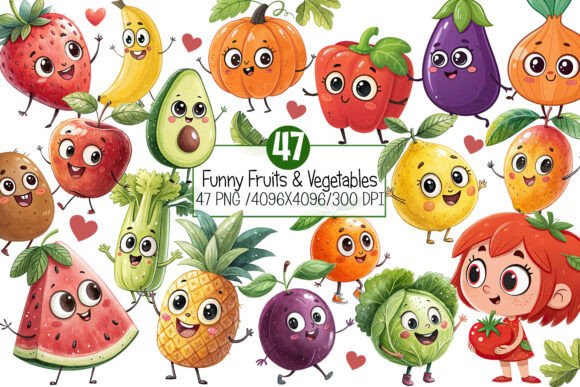
The modern creator, whether a freelance graphic designer, a small business owner, or an educator, understands that attention spans are short. To capture interest, visuals must be instantaneously appealing. A collection featuring 47 unique illustrations of fruits and vegetables with cute smiling faces addresses this need directly. By transforming everyday produce into characters with expressions, these images bypass the sterility often associated with stock photography or generic vector art. They invite the viewer to pause, smile, and engage, creating a micro-moment of joy that can significantly enhance the effectiveness of any creative project.
The Rise of Anthropomorphic Design in Digital Media
The trend of anthropomorphism—attributing human characteristics to non-human entities—is not new, but its application in digital media has matured. In the past, such illustrations were largely confined to children’s literature. Today, however, they permeate various sectors, from health and wellness apps to sustainable food packaging. This evolution reflects a broader cultural shift towards authenticity and playfulness. Consumers, particularly millennials and Gen Z, respond positively to brands that do not take themselves too seriously and that prioritize mental well-being and happiness.
Using Funny Fruits Vegetables Clipart allows creators to tap into this psychological preference. A smiling avocado or a cheerful strawberry does more than identify a product; it suggests a brand personality that is friendly, accessible, and positive. This is particularly relevant in the health and nutrition sector, where traditional messaging can sometimes feel preachy or restrictive. By introducing playful characters, educators and marketers can make healthy eating appear fun and inviting rather than obligatory. This subtle reframing can have a profound impact on user engagement and behavior, especially among children who are influenced heavily by visual cues.
Technical Quality Meets Creative Flexibility
While aesthetic appeal is crucial, technical specifications determine the usability of digital assets in professional workflows. The value of a clipart collection is often defined by its versatility and resolution. High-quality assets save time and reduce friction in the design process. For instance, a package offering images at 4096x4096 pixels with 300 DPI resolution ensures that the illustrations remain crisp and clear, whether they are used on a high-resolution retina display or printed on large-format posters.
The inclusion of transparent backgrounds in PNG format is another critical feature. Transparency allows designers to layer these characters over various backgrounds without the need for complex masking or editing. This ease of use is essential for professionals working under tight deadlines. Whether integrating a banana character into a website header, placing a carrot on a product label, or animating a watermelon for social media, the ability to drag and drop high-resolution files streamlines the creative process. Instant download capabilities further support this efficiency, enabling creators to start their projects immediately without waiting for physical shipments or prolonged approval processes.
Practical Applications Across Industries
The utility of Funny Fruits Vegetables Clipart extends far beyond simple decoration. Its applications are diverse, catering to a wide range of industries and use cases. Understanding where and how to deploy these images can maximize their impact and return on investment.
- Educational Materials and E-Learning: Teachers and educational content creators can use these illustrations to make learning about nutrition, biology, and agriculture engaging. Worksheets, flashcards, and interactive games benefit from the friendly faces of apples, carrots, and strawberries, which help maintain student interest and reduce anxiety around complex topics.
- Brand Identity and Packaging: Small businesses specializing in organic foods, smoothie bars, or farm-to-table services can utilize these characters to create memorable branding. A smiling avocado on a tote bag or a happy blueberry on a yogurt cup creates a distinctive visual identity that stands out on crowded shelves.
- Digital Marketing and Social Media: In the realm of social networks, content that evokes emotion performs better. Using playful fruit characters in Instagram stories, Pinterest pins, or Facebook ads can increase click-through rates. These images are ideal for creating eye-catching graphics for seasonal promotions, health challenges, or community engagement posts.
- Print-on-Demand Products: Entrepreneurs using print-on-demand services can leverage these high-resolution files to create unique merchandise. T-shirts, mugs, stickers, and phone cases featuring cute fruit characters appeal to a broad demographic, from children to adults who appreciate whimsical design.
- Web Design and UI Elements: Web designers can incorporate these illustrations as icons, loading screens, or error page graphics. A cheerful pear on a "404 Not Found" page can soften the frustration of a broken link, improving the overall user experience.
Enhancing User Experience Through Visual Storytelling
Visual storytelling is a powerful method for conveying messages quickly and effectively. Each character in a clipart collection has the potential to tell a story. A winking lemon might suggest zest and energy, while a sleepy peach could imply relaxation and comfort. By selecting specific characters and placing them in contextual settings, creators can guide the viewer’s emotional response. This level of nuance is difficult to achieve with text alone.
For bloggers and content marketers, integrating these illustrations into articles can break up long blocks of text, making the content more readable and visually appealing. This is particularly important for mobile users, who scan content rather than reading it word-for-word. Strategic placement of relevant images can keep readers engaged and reduce bounce rates. Furthermore, unique illustrations contribute to the overall aesthetic of a website, reinforcing brand consistency and professionalism.
Navigating Copyright and Licensing in Creative Projects
When sourcing digital assets, understanding licensing terms is paramount. Using copyrighted images without permission can lead to legal complications and financial penalties. High-quality clipart packages typically come with clear licensing agreements that specify how the images can be used. For professional creators, ensuring that the assets they use are licensed for commercial use is a critical step in risk management.
The availability of instant download packages with clear usage rights provides peace of mind. Creators can confidently use these images in client projects, commercial products, and public-facing materials without worrying about infringement. This transparency fosters trust between asset providers and users, encouraging a sustainable ecosystem for digital creativity. It is always advisable to review the specific license terms associated with any clipart collection to ensure compliance with intended uses, especially for large-scale commercial distributions.
The Future of Playful Design Assets
As technology advances, the way we interact with digital assets continues to evolve. The integration of augmented reality (AR) and virtual reality (VR) offers new possibilities for static illustrations. Imagine pointing a smartphone at a package of fruit snacks and seeing the character jump off the label, or using a smiling vegetable as an avatar in a virtual meeting. While these technologies are still emerging, having high-resolution, transparent background images is the foundational step for such adaptations.
Moreover, the trend towards personalization in marketing means that creators need flexible assets that can be easily modified and customized. A collection with 47 unique characters provides a diverse toolkit for creating varied content without repetition. This variety allows for A/B testing different visuals to see which resonates most with the target audience, data-driven design decisions that can optimize campaign performance.
In conclusion, Funny Fruits Vegetables Clipart represents more than just a set of images; it is a versatile resource for modern creators seeking to infuse their work with joy and personality. By combining high technical quality with engaging artistic style, these assets meet the demands of contemporary design workflows. Whether used for education, branding, or digital marketing, they offer a practical solution for enhancing visual communication. As the digital landscape continues to prioritize human connection and emotional engagement, the role of playful, character-driven imagery will only grow in importance. Embracing these tools allows creators to stay ahead of trends, deliver meaningful experiences, and bring a touch of whimsy to the everyday world.