Traditional Japanese Gold Elements: A Practical Guide to Elegant Vector Design
In the realm of graphic design, few aesthetics command as much immediate respect and visual authority as traditional Japanese artistry. The interplay of negative space, organic forms, and metallic accents creates a visual language that is both timeless and strikingly modern. For designers, marketers, and content creators seeking to elevate their projects without starting from scratch, Traditional Japanese Gold Elements offers a curated solution. This collection is not merely a set of clipart; it is a resource for integrating the serene elegance of Japanese culture into contemporary digital and print media.
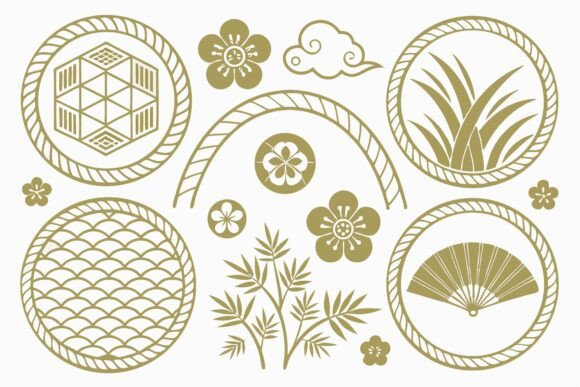
The appeal of this specific asset lies in its execution. Rendered in luxurious gold and pristine white tones, these graphics bypass the common pitfalls of low-resolution stock imagery. By providing the designs in a single, easy-to-use EPS vector file, the collection addresses two critical needs for professional creatives: scalability and editability. Whether you are crafting a brand identity for a luxury spa, designing packaging for artisanal tea, or creating sophisticated social media assets, understanding how to leverage these elements can significantly enhance the perceived value of your work.
The Strategic Value of Vector-Based Cultural Assets
When evaluating design resources, the file format is often as important as the aesthetic itself. The decision to distribute Traditional Japanese Gold Elements as an EPS (Encapsulated PostScript) vector file is a significant advantage for serious professionals. Unlike raster images (such as JPEGs or PNGs), vector graphics are defined by mathematical paths rather than pixels. This means they can be scaled infinitely—from a small business card icon to a large-format trade show banner—without any loss of quality or clarity.
For entrepreneurs and small business owners, this flexibility translates to long-term value. You are not purchasing a static image that becomes obsolete when your branding needs expand. Instead, you are acquiring a versatile toolkit. The vector format allows for precise manipulation of individual components. You can isolate specific motifs, adjust the curvature of a wave, or modify the density of a pattern to suit your specific layout constraints. This level of control ensures that the final output remains crisp and professional, regardless of the medium.
Furthermore, the color scheme of gold and white is strategically chosen for its psychological impact. Gold conveys wealth, prestige, and high quality, while white represents purity, simplicity, and clarity. In marketing, this combination is often used to signal premium positioning. By utilizing Traditional Japanese Gold Elements, creators can instantly imbue their projects with a sense of sophistication and international flair, appealing to audiences who value craftsmanship and attention to detail.
Key Characteristics and Design Integrity
The core strength of this collection lies in its faithful yet adaptable interpretation of Japanese aesthetics. The designs capture the essence of wabi-sabi—the appreciation of imperfection and transience—while maintaining the clean lines required for modern minimalism. Key characteristics include:
- Authentic Motifs: The collection likely includes recognizable symbols such as cherry blossoms (sakura), koi fish, waves, fans, and geometric patterns inspired by traditional textiles. These elements are rendered with a respect for their cultural origins, avoiding caricature or oversimplification.
- High-Contrast Palette: The use of gold against white creates a high-contrast visual that is easy to read and visually arresting. This makes the elements particularly effective for headers, borders, and focal points in layout design.
- Layered Complexity: While the overall impression is one of elegance, the individual elements often feature intricate details. This complexity adds depth to flat designs, preventing them from appearing sterile or generic.
From a usability standpoint, the "single file" approach simplifies asset management. For freelancers and agencies juggling multiple projects, having all related graphics in one organized EPS file reduces clutter and streamlines the workflow. It eliminates the need to search through folders of disparate files, allowing designers to focus on creativity rather than administration.
Real-World Applications and Performance
To understand the practical utility of Traditional Japanese Gold Elements, it is helpful to consider specific use cases across different industries. The versatility of the gold-and-white theme allows it to perform well in various contexts:
Luxury Branding and Packaging
For businesses in the beauty, wellness, or gourmet food sectors, packaging is a critical touchpoint. These vector elements can be used to create elegant borders on product boxes, labels for bottles, or backgrounds for promotional materials. The gold accents mimic the look of foil stamping, a popular premium printing technique, allowing designers to preview the final effect digitally before committing to expensive production methods.
Digital Marketing and Social Media
In the digital space, attention spans are short. Graphics that convey quality quickly are essential. Marketers can use these elements to frame quotes, highlight special offers, or create cohesive Instagram story templates. The minimalist nature of the designs ensures that text remains legible, while the gold touches draw the eye to key information. Because the files are vectors, they can be exported at any resolution required by different platforms, ensuring consistent quality across web and mobile devices.
Editorial and Print Design
Publishers and bloggers can utilize these graphics to break up text, create chapter headings, or design cover pages for e-books and reports. The traditional Japanese aesthetic adds a layer of cultural richness and seriousness to editorial content, making it suitable for topics ranging from travel and history to mindfulness and business philosophy.
Who Benefits Most from This Collection?
While any designer might appreciate high-quality assets, Traditional Japanese Gold Elements is particularly beneficial for specific groups:
- Freelance Graphic Designers: Those who need to deliver high-end results quickly without charging clients for custom illustration time. This collection serves as a reliable foundation that can be customized to fit client briefs.
- Small Business Owners: Entrepreneurs who manage their own marketing materials. The ease of use and professional finish allow non-designers to create polished collateral that competes with larger brands.
- Wedding and Event Planners: The elegance of gold and white is a staple in wedding design. These elements can be used for invitations, save-the-dates, and table settings, offering a unique alternative to standard Western floral motifs.
- Educators and Content Creators: Individuals creating courses or presentations on Asian culture, art history, or global business practices. The authentic visuals help reinforce the subject matter and engage the audience.
Considerations and Limitations
While Traditional Japanese Gold Elements offers significant value, it is important to approach its use with strategic awareness. No design tool is a universal solution, and understanding its limitations ensures better outcomes.
First, the color palette, while elegant, is restrictive. If your brand guidelines require vibrant colors like red, blue, or green, these gold and white elements may clash or require significant recoloring. While vector files allow for color changes, altering the gold gradient effects to flat colors can sometimes diminish the luxurious feel. Designers should consider whether the gold tone aligns with their overall brand identity before purchase.
Second, cultural sensitivity is paramount. When using traditional motifs, it is essential to understand their context and meaning. Misusing sacred or highly specific cultural symbols can lead to misunderstandings or offense. Users should research the specific elements they choose to ensure they are appropriate for their intended message and audience. This collection serves as a tribute to Japanese culture, and respecting that heritage enhances the authenticity of the final design.
Finally, while the EPS format is powerful, it requires software capable of editing vector files, such as Adobe Illustrator, CorelDRAW, or Inkscape. Users who only have access to basic image editors may find the file type challenging to work with directly. However, most professional design workflows already include vector capabilities, making this a minor hurdle for the target audience.
Final Thoughts on Usability and Long-Term Value
In an era where digital content is abundant but often generic, Traditional Japanese Gold Elements stands out as a resource for those seeking distinction. It bridges the gap between traditional artistry and modern design efficiency. The combination of scalable vector technology and a sophisticated aesthetic provides a tool that is both practical and inspiring.
For professionals looking to add a touch of international sophistication to their projects, this collection offers a reliable and high-quality solution. It reduces the time spent on creating complex decorative elements from scratch, allowing creators to focus on strategy and messaging. By integrating these designs thoughtfully, users can enhance their visual communication, conveying messages of quality, tradition, and elegance with clarity and impact. As with any design asset, its true value is realized not just in its acquisition, but in its thoughtful application within a broader creative vision.